From the classroom
The chicken that rescued my lesson
A stalled Zoom activity in a community ESL class, a laugh, and one answer in Spanish. What it taught me about first languages in an English classroom.
By Logan Shaffer · · 4 min read
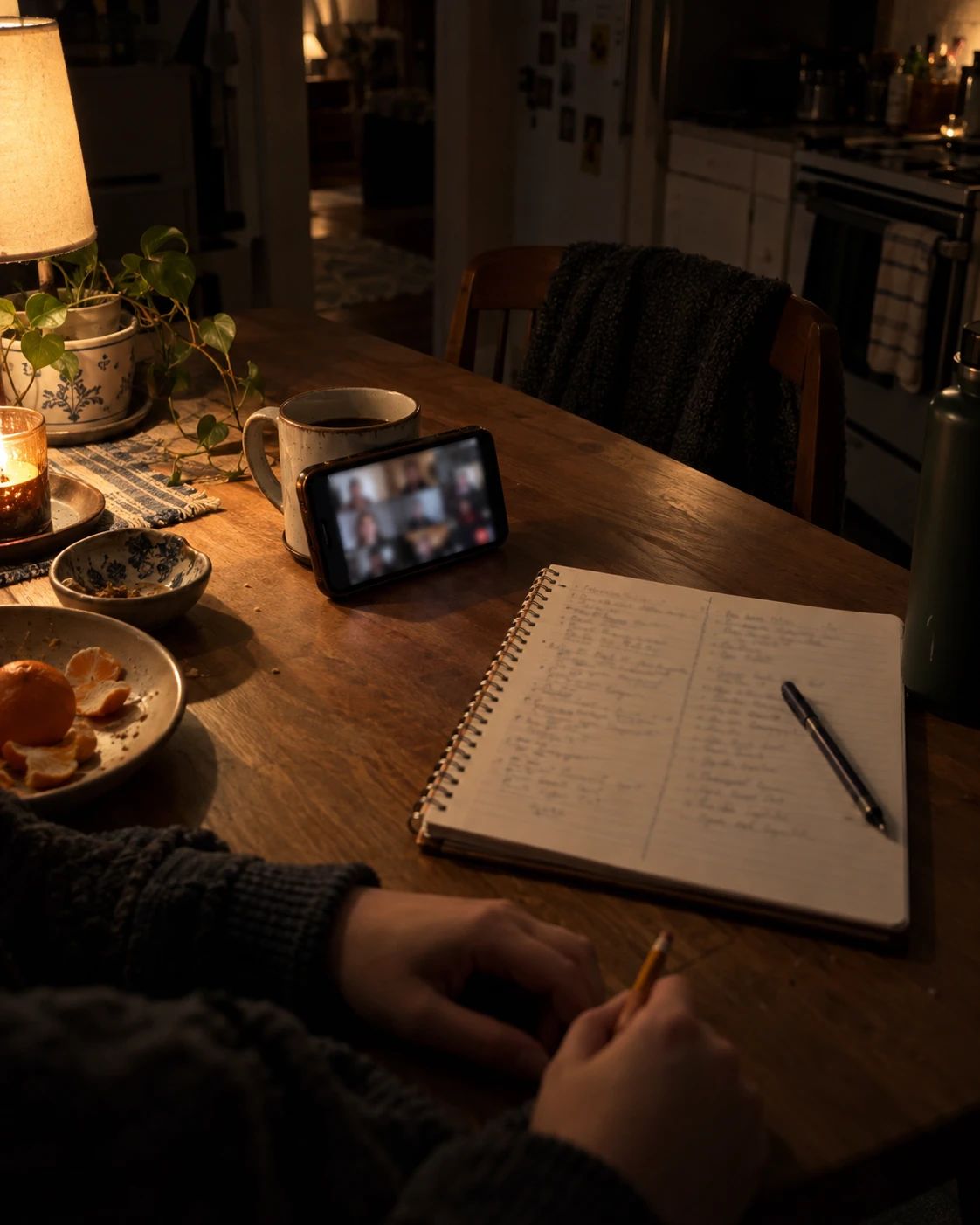
In the spring of 2021 I co-taught a free English class for adult immigrants in Philadelphia, run through Penn's Graduate School of Education. Every student in the room spoke Spanish. None of them was in the room, because the class ran on Zoom, and most of them joined from a phone.
Here is the moment I still think about, from a transcript I made for a course paper. We were doing an activity about pets. T is me.
- T: maybe a fish, right?
- Marta: mhm.
- T: pet fish. smiling
- T: what about a… 🐔🗣️ BOK BOK BOK everyone laughs
- T: maybe a pet chicken.
- Marta: ehh, the chicken… se podría, se podría, pero pues no es muy recomendable tener un animal en un apartamento. (You could, you could, but it's really not a good idea to keep an animal in an apartment.)
- T: laughs right, right. It's not recommended to keep a chicken in an apartment.
- Luis: a:::h.
- Marta: laughs

Before the chicken, the two students in that breakout had been struggling for several minutes. They weren't answering and they weren't asking. That silence is the most common failure state in a language class, and it's invisible on a video call, because a quiet tile looks the same whether the student is thinking or lost.
After the chicken, two things happened in the space of five seconds. Marta answered in Spanish, which she hadn't done all lesson. And Luis, hearing her Spanish, said "a:::h", the sound a person makes when the task finally has a shape. The activity worked from there.
What actually did the work
I used to think of a laugh as a nice-to-have. The research calls what happened a "laughing moment" (Matsumoto, Lee and Kim, 2022), and treats it as a turn in the conversation like any other: it changes who feels able to speak next. That's exactly what it did. The tension in the breakout dropped, and Marta took a risk she hadn't been taking, which was to answer in the language she could think in.
That second thing has a name too, translanguaging (García and Wei, 2014): a student using everything they know, in whatever language they know it, to make meaning. Marta's Spanish wasn't a retreat from English. It was the bridge that got Luis to the English. He understood the task through her sentence, and then the class carried on in English.
My field notes from that week say it plainly: "translanguaging has been the saving grace of our instruction." They also say something I'm less proud of. In the first week, most students couldn't work the Zoom chat, and my instructions in English were too hard to follow. I wrote: "In hindsight, I should have done the instruction in Spanish since I am able to, rather than in English." I speak Spanish. I still defaulted to English-only, because that's what an English class is supposed to sound like. It took a chicken and a paper to change my mind.
What a content teacher can take from this
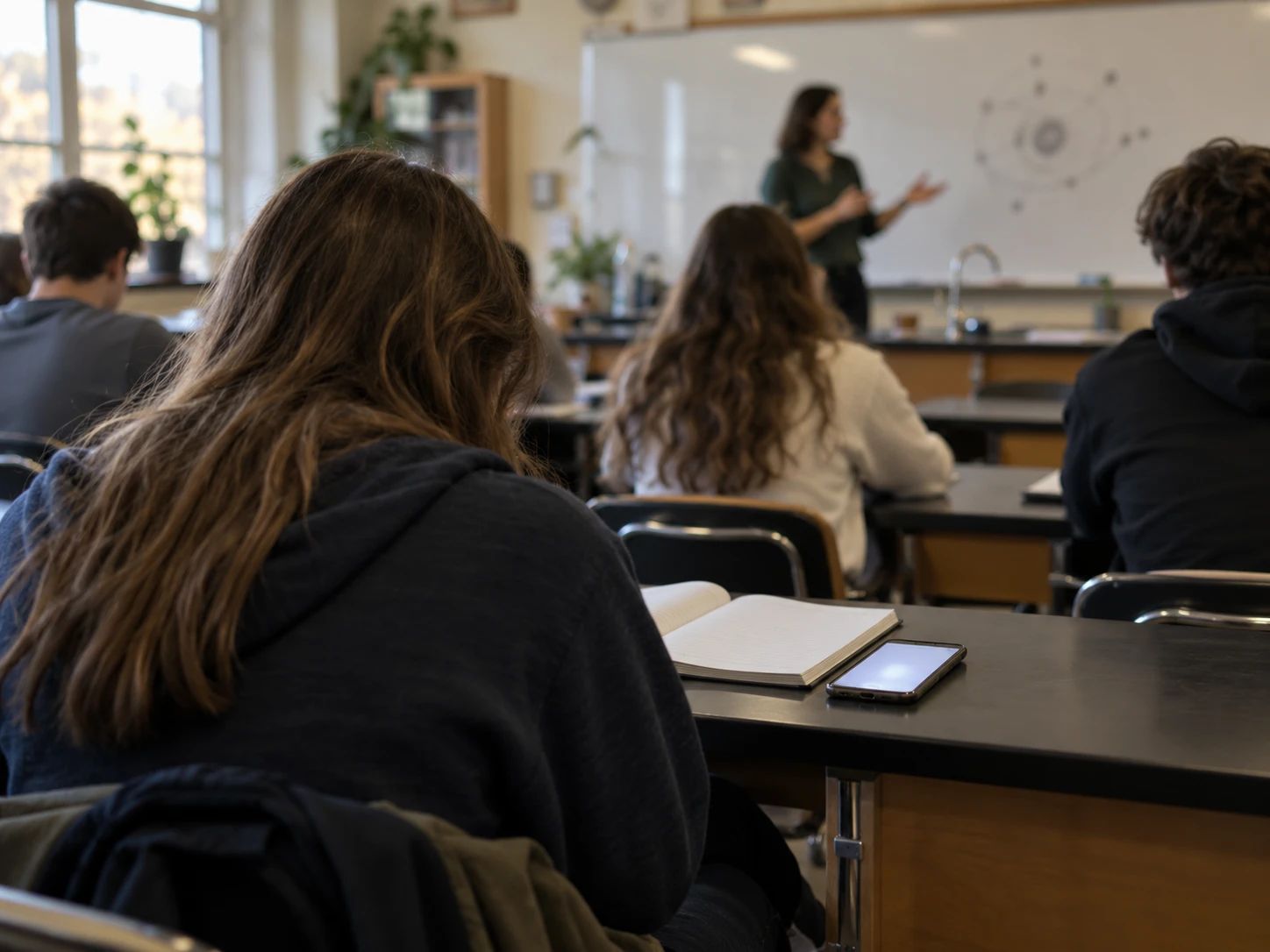
Most teachers with English learners in the room aren't language teachers. You teach biology or history or maths, and a student who speaks Ukrainian or Mandarin or Spanish is sitting in row three trying to follow. Three things from that Zoom breakout transfer straight to that room.
- Separate the meaning from the practice. The meaning of the task can live in the first language. Let students confirm it with each other in it, or read it in it. The practice, the answer they give you and the words they use for it, lives in English. Mixing the two up is how a student ends up silent for ten minutes.
- Give the instructions in the language they'll understand, if you can. If you can't, a translation of the instructions on the student's own screen does the same job. The instructions are the one part of a lesson where nobody should be guessing.
- Change the temperature before you change the task. Nobody in that breakout was going to ask a question at the tension we were at. The chicken was an accident. The effect of it is something you can get on purpose: a small joke, an admitted mistake, a question you don't know the answer to. My co-teacher and I spent the end of one class answering questions we had to look up, and my notes say the students "appreciated the effort and now feel more comfortable going forward."
One more thing from those notes, because it decides whether any of this reaches the student: they were on phones. If the help you give English learners only works on a laptop, most of them won't see it.
Why I'm telling you this
I build live captions for classrooms with English learners. The teacher talks, the words appear on the board, and words and phrases are translated into the students' home language automatically. The reason it exists is that breakout room: Marta's Spanish got Luis through the task, and most classrooms don't have a Marta. The captions give every student one.
If you teach in a room like that and want to see it running, book a demo.
References
- Matsumoto, Y., Lee, J. J., and Kim, E. (2022). "Laughing moments": the complex negotiation of laughing acts among students and teachers in an English as a second language classroom. Classroom Discourse, 13(1), 32–63. Published online 31 March 2021, in print 2 January 2022. https://doi.org/10.1080/19463014.2020.1808494 (opens in a new tab)
- García, O., & Wei, L. (2014). Translanguaging: Language, Bilingualism and Education. Palgrave Macmillan, Palgrave Pivot, London, 165 pp. ISBN 978-1-137-38575-8. https://doi.org/10.1057/9781137385765 (opens in a new tab)